Every public event Critical Business School has run and has scheduled — what we teach, where, and who has led each one. Electives run as four-week classes or 90-minute masterclasses.

8 events · Mar 2026 – Sep 2026

8
Events
154
Seats filled
Mar 2026 – Sep 2026
Span
WhereIndex Greenpoint, 698 Manhattan Ave Floors 2 & 3, Brooklyn, NY 11222, USA
HostsNitzan Hermon, Index

A masterclass on thinking about your work.

Every brief makes a claim about what matters. Most of them never claim it out loud.

Philosophizing is the act of connecting and sharing our framing of value and the world. To ourselves and the people around us. It is self-knowledge, and takes rigor and patience.

Philosophy is the act of generalizing meaning for all people, philosophizing the individual act of connecting to what already moves all of your decisions.

In philosophizing without philosophy, we will connect and amplify everyone's ways of receiving and noticing the world.

Since meaning and value are the same thing, philosophizing will necessarily help with articulating worthy opportunities and sharing the value we might provide to them.

With AI, efficiency costs nothing, and attention — the embodied kind, yours — is the only thing left that's expensive.

![](https://images.lumacdn.com/cdn-cgi/image/format=auto,dpr=2,anim=false,background=white,quality=75,width=800/uploads/b1/37af7a06-f506-4fab-abb4-95726a0cf97f.jpeg)

In this masterclass, we'll practice one question on your own work: this thing that claimed my attention, what does it mean for me?

We'll work on three things. A brief and what it leaves unsaid. Aesthetics past taste. The ethics of making things that hold attention.

You don't need a background in philosophy, and you don't need to have read anything. If you make things at work, or personal projects on the side, this evening is for you.

Bring something real — in progress, unresolved, and yours.

Led by Nitzan Hermon, founder of Critical Business School.

WhereIndex Greenpoint, 698 Manhattan Ave Floors 2 & 3, Brooklyn, NY 11222, USA
HostsNitzan Hermon, Index

A masterclass on automation and practice.

Every job consists of tasks. No matter how much we would like to avoid it, habits form over time, and those habits can be structured and eventually automated.

Taylor's scientific management (1911) invited systematic, standardized thinking to all aspects of work, essentially making work, and everyone within it, average and optimized.

But the average worker doesn't exist. When the Air Force measured thousands of pilots against the ten dimensions of the "average" cockpit, the number who fit all ten was zero, as Todd Rose writes in The End of Average.

The fix wasn't a better average, but an adjustable cockpit.

AI models are averaging machines by definition. But that is ok, for average things. Things that are specific and not generalizable need to be thought of and planned for differently.

In this masterclass, we'll plan your automation–from you and for you. You will define your practice by what you refuse to automate, specifically for your practice.

This is the third masterclass in the series: from thinking, to communicating, and now making.

You don't need a technical background, and you don't need to have attended the first two evenings. If you make things at work, or personal projects on the side, this evening is for you.

The 90-minute masterclass works in two ways: as a complete evening on its own, and as your introduction to the course if you'd like to continue. What you pay for the masterclass counts toward the course fee.

https://criticalbusinessschool.com/ai-literacy

Led by Nitzan Hermon, founder of Critical Business School.

WhereIndex Greenpoint, 698 Manhattan Ave Floors 2 & 3, Brooklyn, NY 11222, USA
HostsNitzan Hermon, Index

Understand the systems you work within, instead of fighting against them.

The systems we care about, organizations, markets, cultures, the room you're sitting in, were not designed; they emerged. Like a standing ovation that might spread through a room or die in the third row, It’s a phenomenon that’s design transcendent.

Emergence is the opposite of design, which is not a problem to solve, but rather the thing we're here to take seriously.

In this masterclass, we won't practice controlling complexity because that can't be done. Instead, we will develop the skills to read and understand it: identifying emergence, scale, and self-organization. The muscle to cultivate resilience when faced with confusion, recognizing these moments as the leading edge of creativity, not its failure.

You'll leave with

  • A working distinction between complicated and complex — and how this knowledge will change the way you work.
  • Frameworks for reading emergence, self-organization, and scale in the systems you lead
  • A new relationship to confusion: reading it as a signal of possibility, not a failure of design.
  • Leadership tools for designing inside Systems you can't control.

Who is it for:

If you make things, lead things, or are responsible for outcomes within something larger than yourself —designer, strategist, founder, team lead, creative director—this evening is for you. No technical background needed.

About

Nitzan Hermon designed and teaches the first complexity design course at The New School, writes Complexity Design at Being in Space, and has visited the Santa Fe Institute, where complexity science began.

Go deeper

This masterclass is the entry point to the full Critical Business School complexity design course.
Get in touch to continue after the evening.

WhereIndex Greenpoint, 698 Manhattan Ave Floors 2 & 3, Brooklyn, NY 11222, USA
HostsNitzan Hermon

A masterclass on meaning and machines.

Today, everyone has access to the same tools. The same models, the same prompts, the same outputs. Which raises a question worth sitting with: what makes your work yours? The answer is aesthetics. Not taste as decoration, but taste as identity, the thing that makes what you create different from others, making the same thing, with the same tools. In a moment when production is cheap and infinite, your aesthetic is the one part of the work that can't be generated. The good news: you already have one. Most of us have just never been asked to name it.

That's what we'll do together in this masterclass. We'll get specific about your aesthetic — what it is, and how to put words to it. We'll work through ways to model the specificity of your voice: what you make, who you're making it for, and why that answer matters more now than ever.

We’re going to dig into the bigger question underneath: what self-actualization looks like when machines can do the making.

You don't need a technical background, and you don't need to think of yourself as an artist. If you make things at work, in a practice, on the side, this evening is for you.

The 90-minute masterclass will work two ways: as a complete evening on its own, and as your introduction to the course if you'd like to continue.


This text was written with Claude, from a prompt that was little more than a title and four fragments — including "aesthetics and what makes you different than anyone else who makes the same thing with the same tools." Which is, fittingly, the whole point of the class.

WhereIndex Greenpoint, 698 Manhattan Ave Floors 2 & 3, Brooklyn, NY 11222, USA
HostsNitzan Hermon, Index

You're invited to a 90-minute masterclass on June 2nd at Index, and it works two ways: as a complete evening on its own, and as your introduction to the full quarterly elective if you'd like to continue.

This session is for anyone who already uses AI tools — at work, in a creative practice, in everyday life — and wants to think more carefully about how. You don't need a technical background. You don't need to already know what computational thinking means. We'll build that vocabulary together.

Most of what's said about AI is about speed: how much faster you can move, how many more things you can produce. That's real, and it matters. But there's a quieter, more useful application that gets less attention. Computational thinking can slow you down in exactly the places where slowing down pays off. It can help you name what you actually want before you ask for it. It can surface assumptions you didn't know you were making. It can hold a question open long enough for you to genuinely answer it.

In our 90 minutes together, we'll:

  • Work through concrete examples of computational thinking as a thinking aid, not an answer machine
  • Practice prompts and patterns that build clarity instead of collapsing it
  • Discuss where this approach is most useful in your own work
  • Leave with a small set of moves you can take into your next AI-assisted task

https://criticalbusinessschool.com/ai-literacy

The full AI Literacy elective runs across the quarter and goes deeper into prompt design, computational thinking as a practice, and using AI as a developmental tool rather than a productivity one.

Led by Nitzan Hermon, founder of Critical Business School.

This text was written using AI

WhereIndex Chinatown, 120 Walker St 3rd Floor, New York, NY 10013, USA
HostsNitzan Hermon, Index

## AI can write. It cannot mean.

Intelligence requires meaning. Language models, like ChatGPT, Claude, and Gemini, have no meaning, only math. That distinction is the most important thing nobody is talking about.

AI Literacy is a space to consider where AI meets human processes, and to decipher how these tools can shape our attention, our communication, and the ways we work with computers and each other.

Most conversations about AI focus on what it can do. This one asks something different: what does it mean to understand it?

## Salon #2: Signal and Sign

Can a calculator understand poetry?

In a famous experiment, researchers found a single neuron in a patient's brain that fired for Jennifer Aniston — her photo, her name, even a cartoon sketch. One cell, one concept. That's how human cognition organizes meaning: sharp, symbolic, compressed.

Large language models do something else. They process language as statistics; probabilities and distances between tokens. The output can sound like understanding, but no concept is held anywhere inside. The fluency is real. The comprehension isn't.

> A language model has no Jennifer Aniston neuron. It has no neurons at all, just weights. There is no "there" there.

This salon sits in that gap. As AI gets embedded in how we write, summarize, and decide, the difference between meaning and pattern-matching is shaping real judgment calls. We'll explore what that means for how we communicate and think, and for the literacies we need to stay intentional.

In this space, we invite curiosity over conclusions. Come ready to think, question, and engage.

## Facilitated by Nitzan Hermon

Nitzan Hermon is a coach and educator working at the intersection of complexity, systems thinking, leadership, and personal development.

## Featured Guests:

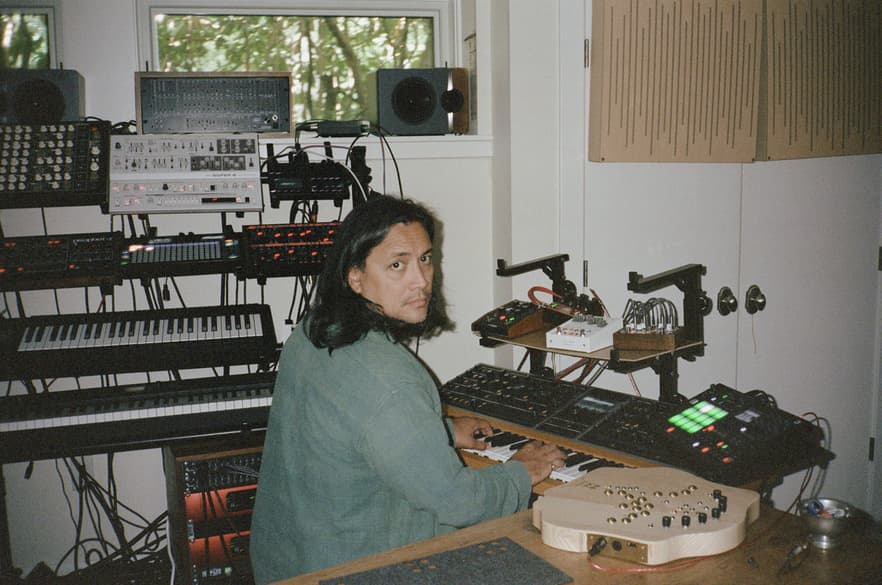
Johnny Dance
![](https://images.lumacdn.com/cdn-cgi/image/format=auto,dpr=2,anim=false,background=white,quality=75,width=441.96875/uploads/p2/f13557ed-13d6-4fb3-9775-ed0041bd177e.jpg)

Johnny Dance is an investor, author, and artist. Originally from Australia, he spent many years in Hong Kong and London before settling in Boston. He is writing a book on mathematics games and ontology.

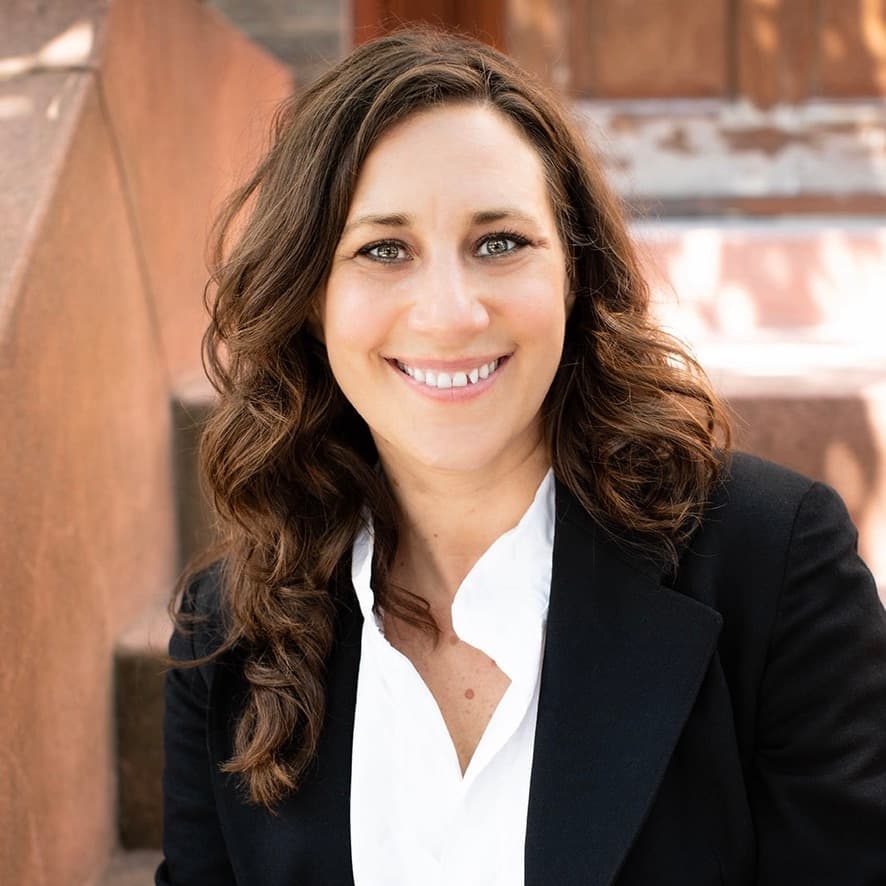
Kristy Zadrozny
![](https://images.lumacdn.com/cdn-cgi/image/format=auto,dpr=2,anim=false,background=white,quality=75,width=448/uploads/uh/264cea8d-2606-4e14-a2db-332af7faaf6f.jpg)

Kristy Zadrozny is a NYC therapist and Chief Clinical Officer at Calla Collective, a reproductive mental health practice. Drawing on psychodynamic theory, motivational interviewing, and mindfulness, she helps thoughtful people wake up from autopilot and build a richer relationship with uncertainty and meaning.

Stephen P. Williams

![](https://images.lumacdn.com/cdn-cgi/image/format=auto,dpr=2,anim=false,background=white,quality=75,width=800/uploads/af/63113c56-0988-409d-b987-2b3b1894d037.jpg)

Stephen P. Williams is a journalist, author, and ghostwriter who writes narrative nonfiction and fiction, and collaborates on books with leading thinkers and public figures. Lately, he's been teaching the models of a large AI company how to write better, in the process learning what it is like to collaborate with a machine.

WhereZoom
HostsNitzan Hermon, Danya Shults

Death is final (as far as I know). This elective is not. Consider it a nonlinear taste — a chance to move slowly around something most of us spend a lot of energy not looking at directly.

We'll ask questions like: What if an ending were a climax rather than a collapse? Why don't we prepare for the end — personally, institutionally, at all? What's dying in or around you right now, and what might that be making room for?

The arc moves from pleasure to avoidance to ritual to action. We'll tell stories, make things, sit with what's unfinished. Some of it will be uncomfortable. Some of it will be surprisingly alive.

We'll certainly not be alone. And we'll all leave a little more open and ready — for what depends entirely on what you bring.

May 1st, 8th, 15th, 22nd
1 EST, 60 minutes.

Read more https://criticalbusinessschool.com/a-little-death

WhereIndex Greenpoint, 698 Manhattan Ave Floors 2 & 3, Brooklyn, NY 11222, USA
HostsIndex, Nitzan Hermon

AI literacy is a new way of thinking about the future.

AI Literacy is a space to consider where AI meets human process — deciphering how these tools can shape our attention, our communication, and the ways we work with computers and each other.

Most conversations about AI focus on what it can do. This one asks something different: what does it mean to understand it?

At a technical level, AI systems like large language models are fundamentally prediction engines — they generate outputs by calculating what word, image, or action is most likely to come next. That logic shapes not just what AI produces, but how it reasons, where it fails, and what it quietly optimizes for. AI literacy means developing the ability to see that logic clearly — so you can work with it intentionally rather than inherit its assumptions.

In this space, we invite curiosity over conclusions — come ready to think, question, and engage.

Salon #1: Beyond Prediction

Why AI literacy is not about Prediction

The AI Literacy Salon series platforms speakers who can narrate their logic rather than prescribe a worldview. Beyond Prediction asks: if AI is built to predict, what gets lost when we let it lead? How do practitioners across design, venture, and knowledge work hold onto judgment, craft, and discernment in an AI-assisted landscape?

Facilitated by Nitzan Hermon

Nitzan Hermon is a coach and educator working at the intersection of complexity, systems thinking, leadership, and personal development.

Featured Guests:

Noa DolbergGoogle's Material Design

Noa Dolberg leads UX at Google's Material Design, shaping how the cross-platform design system evolves in an increasingly AI-assisted landscape. Working at the intersection of UX strategy and engineering, she focuses on scaling complex workflows, making her a sharp voice on maintaining craft, alignment, and human judgment as AI reshapes how designers work.

Cherae Robinson Head of Platform, Flybridge

Cherae Robinson works in venture at Flybridge and has spent years building communities around cultural access and founder development. As AI tools reshape who can build and how, she brings a platform and equity lens to AI literacy — thinking about which communities are developing fluency with these tools, and what's at stake when they don't.

Sam SpurlinFounder, Deliberate Works

Sam Spurlin founded Deliberate Works to help knowledge workers build more intentional practices around how they think and collaborate. As AI becomes embedded in knowledge work, his focus on deliberate practice and cognitive clarity becomes directly relevant — he's interested in helping people develop genuine discernment about when and how to use AI, rather than defaulting to it unreflectively.